


Portuguese Laurel Hedging - Prunus Lusitanica - Root Ball
A refined evergreen hedge bringing Mediterranean elegance
£144
£180
20% OFF
Rootball

Evergreen

Pollinator

Fast growing
Buy now, pay later

Key information
Portuguese Laurel hedging has a polished, Mediterranean elegance. Its glossy, deep green leaves are held on distinctive red stems, giving a refined finish that brings warmth and texture to both classic and contemporary gardens.
Prunus lusitanica is the more tailored relative of cherry laurel, with smaller, finer leaves that clip beautifully into neat, formal shapes. In early summer, long, slender spires of scented white flowers appear, much loved by bees, followed by small dark berries that birds enjoy. It is hardy and adaptable, happy in sun or partial shade and one of the few laurels to thrive on chalk.
Our Portuguese Laurel is field grown and supplied as generous root ball plants in three heights, so you can choose the scale that best suits your garden.
Classic Planting, at 2 plants per metre, gives a hedge that knits together gracefully over time. Established Density, at 3 plants per metre, creates a fuller, more finished look from the day it is planted. This is not necessary for the 175-200cm variety due to the maturity and width of the plant on delivery.
Root ball Portuguese laurel is lifted fresh from the field and delivered from October through to spring.
Delivery & Returns
SOTO GARDENS EDITS AND COLLECTIONS: Soto deliver nationwide for all plants, standard size pots and accessories via our courier partner, DPD within 3-10 working days. You will receive an email asking you to schedule your delivery day. XL pots are delivered in 10-15 working days. Delivery is free for all orders over £75. For orders under £75, we charge £6. Soto Guests, including BIG GREEN EGG, GARDEN TRADING and FLOWERBX are delivered in accordance with their T&C’s. Please see our delivery and returns page for more information. Please contact Soto if you’ve any questions.
Top Tip
In its first winter, keep the soil around your new hedge moist during dry spells. Evergreen leaves continue to lose moisture through the colder months, and a well watered hedge copes far better with cold, drying winds.
How to care for Prunus Lusitanica Portuguese Laurel Hedging

Aspect
Sunny & Partial Shade
Thrives in sunny and partial positions. Portuguese Laurel also tolerates deeper shade, though growth will be slower.

Care Level
Easy to look after
Regular pruning isn't necessary. A trim once or twice a year keeps it crisp and dense.

Watering
Weekly when establishing
Water regularly through the first growing season, then only in prolonged dry spells.

Feeding
Compost and mulch annually
Plant with plenty of good quality, peat free compost and mulch around the base each spring.

Soil
Will be fine in most soils
Tolerates most soil types, including chalk. Portuguese laurel dislikes waterlogged ground, so mix in grit on heavy soils.

Flowering period
- Jan
- Feb
- Mar
- Apr
- May
- Jun
- Jul
- Aug
- Sep
- Oct
- Nov
- Dec

Foliage (Evergreen)
- Jan
- Feb
- Mar
- Apr
- May
- Jun
- Jul
- Aug
- Sep
- Oct
- Nov
- Dec
Quick facts
BOTANICAL NAME
Prunus lusitanica, Portuguese Laurel
PLANT TYPE
Always green (evergreen)
HARDINESS
Hardy
BORDER POSITION
Back of border, boundaries and formal hedging
TOXICITY
Toxic if eaten, including leaves and berries.
EVENTUAL GROWTH
Available in three heights. Grows around 20-40cm a year and can be kept at your chosen height

How to plant your Portuguese laurel hedging - Step by step guide
1. Before you plant - Plant within a few days of delivery, on a mild day when the ground is neither frozen nor waterlogged. If you need to wait, stand the plants upright in a sheltered, shady spot and keep the root balls moist.
2. Mark your line and dig a trench - Run a string between two canes to mark a straight line, leaving room behind to reach both sides when clipping. Dig a trench roughly 60cm wide and as deep as the root balls, and loosen the soil at the base with a fork.
3. Improve the soil - Mix plenty of compost into the soil you have removed. On heavy clay, add grit to help drainage.
4. Space your plants - For Classic Planting, space plants 50cm apart. For Established Density, space them roughly 33cm apart. The top of each root ball should sit level with the surrounding soil, so take care not to plant too deep.
5. Loosen the wrapping - Untie the hessian at the neck of each plant and fold it back from the top of the root ball. The hessian is biodegradable and can stay below the soil. Remove any plastic, string or ties completely.
6. Backfill, water and mulch - Fill around the root balls with your improved soil, firming gently with your heel. Water each plant thoroughly, then spread a layer of finishing bark along the base, keeping it just clear of the stems.
7. Aftercare - Water deeply once or twice a week through the first spring and summer, especially in dry weather. Trim lightly in late summer to encourage bushy growth. Once established, clip once or twice a year between late spring and late summer, ideally after flowering. Always clear away clippings after trimming.
How to prune and trim your Portuguese laurel hedging
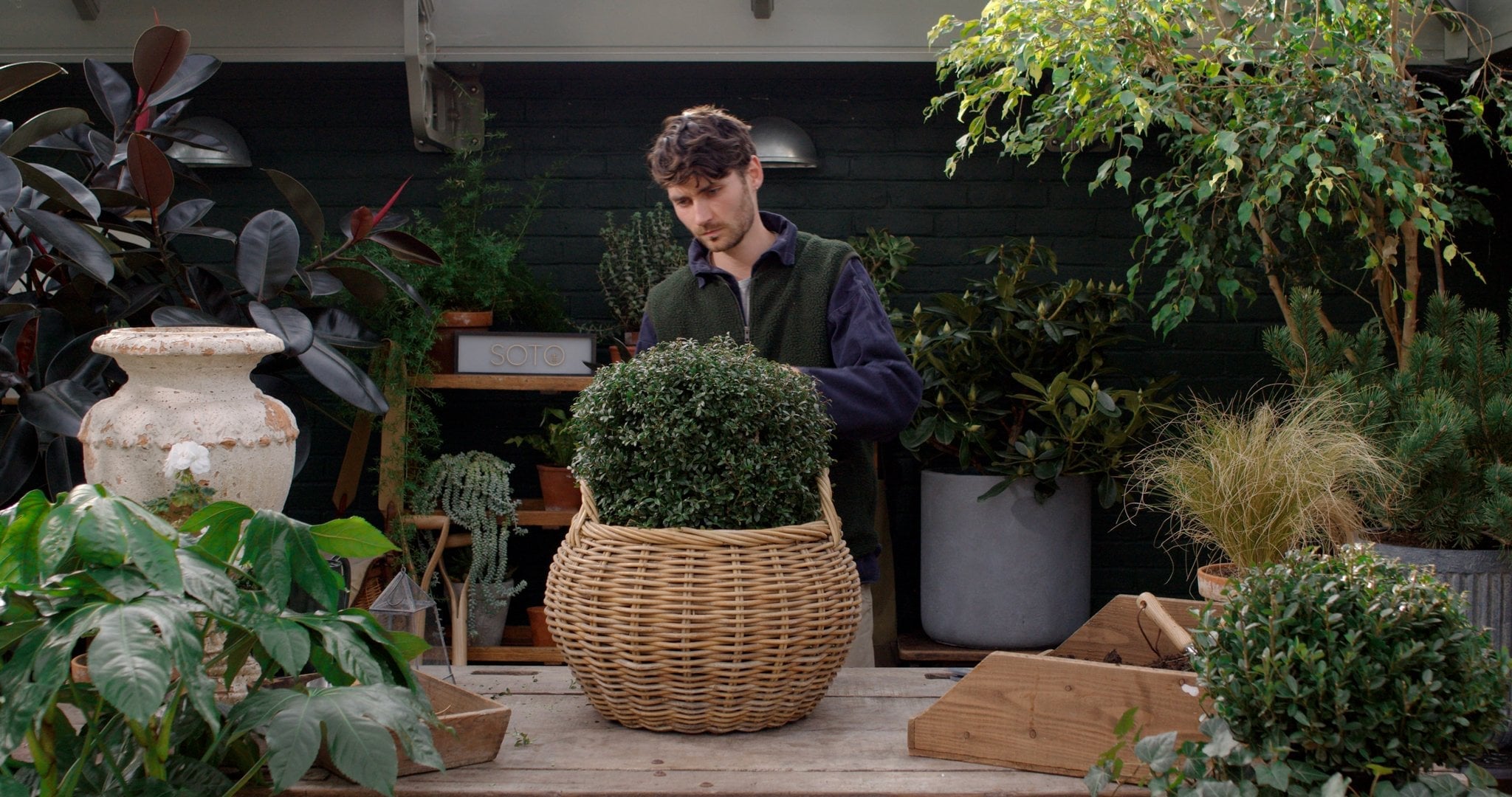
In this Soto Masterclass we show you how to prune and trim. Follow along for guidance on clipping your hedging.
Will's styling notes for using Portuguese laurel hedging within your outdoor space
- Use Portuguese laurel for a hedge with a softer, more refined finish than cherry laurel, particularly in smaller or more formal gardens.
- Clip it into clean, straight lines to show off the red stems against the glossy foliage.
- Pair it with terracotta pots, olive trees or lavender for a relaxed Mediterranean feel.
- Leave enough space in front of the hedge for access when trimming.
Proven in real homes and gardens
Real experiences from people who’ve already transformed their space.

Awesome company
Extremely good communication. Service with a smile. Extremely knowledgeable. On time. Fantastic plants with a great layout plan. Would have given 6 stars

Gorgeous plants
Helpful! professional! Beautiful plants! I can’t recommend this business enough

So helpful from start to finish with…
So helpful from start to finish with advice and such clear guidance in the packs that arrived. I am so grateful to have a ‘ready made’ front of house border - thank you Soto !

What a clever concept
What a clever concept. Gardening made easy and foolproof. Plants are beautiful, healthy and stylish. Lovely and caring customer service. Definitely again - thank you so much. ****** stars !

Fabulous Plants!
Absolutely fabulous plants and service from Soto. This is my 6th order with them. Plants always look amazing and so well packaged.

Very Happy !
My second delivery of plants from Soto Gardens. Excellent plants, first class packaging and prompt delivery. My border design has been made easy - thanks to Soto Gardens.

Excellent service
Excellent service, beautiful plants, great design. Very happy.

Well done Soto Gardens
Amazing customer service, fabulous plants that arrive in perfect condition. Easy website to navigate. Beats all other horticultural websites hands down.

Garden inspiration in a box
Beautiful quality plants, prompt delivery and well packaged. Planting guide was extremely easy to follow and made me look like a gardening pro’ - thank you
