


At a glance
Care Level
Foliage
- J
- F
- M
- A
- M
- J
- J
- A
- S
- O
- N
- D
Eventual height and spread
Height - 0.5-1m
Width - 0.5-1m

It reaches full growth in 20-50 years
General care for Dwarf Mountain Pine

Foliage
Green

Aspect
Sun - Partial

Cut back
Spring

Divide
Not Required

Dead head
Autumn

Feed
Spring
How to care for Dwarf Mountain Pine
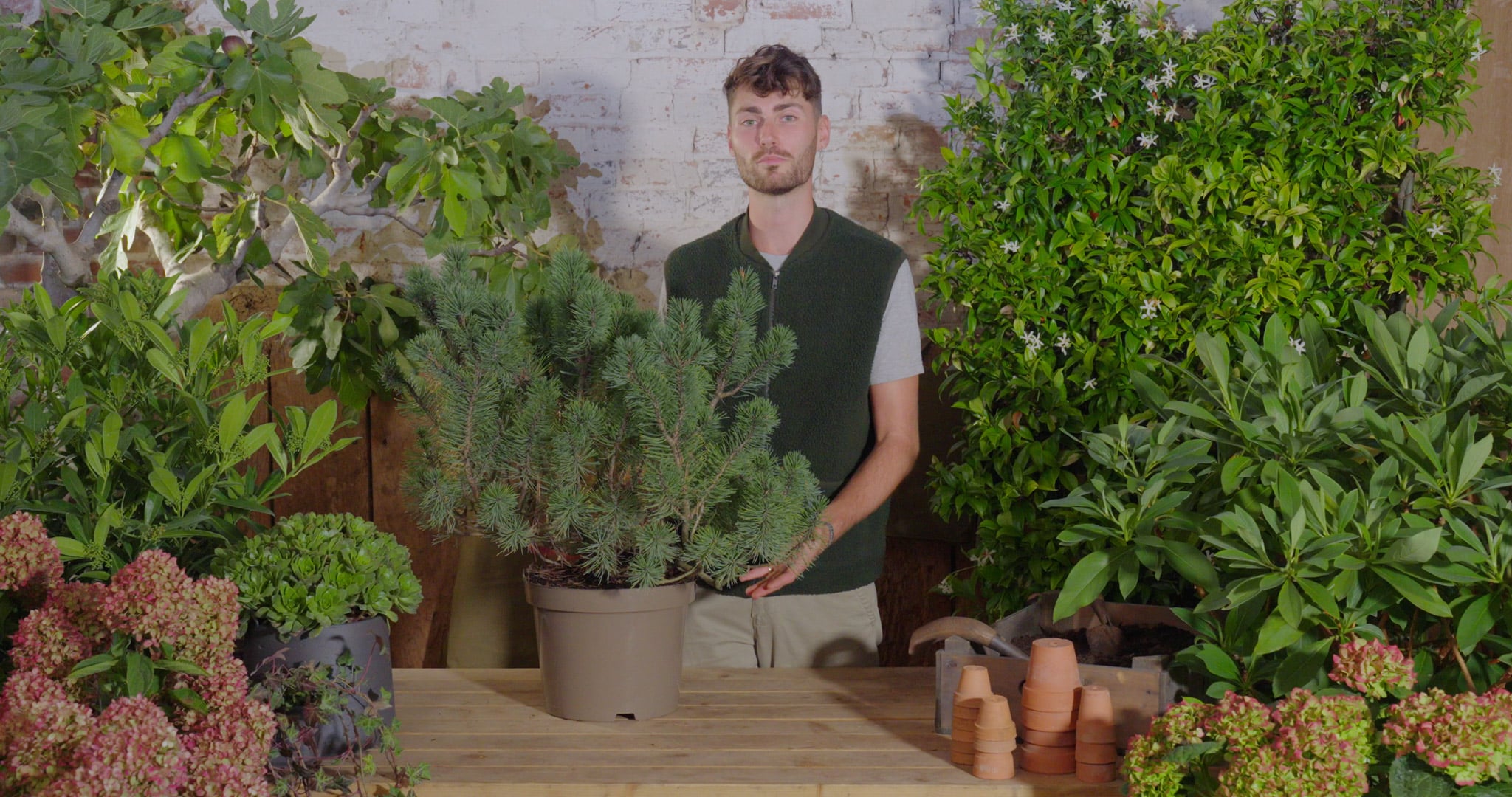
Seasonal guide to care for your
Dwarf Mountain Pine
Pinus mugo 'Mop', commonly known as Mugo Pine or Mountain Pine, is a slow-growing, evergreen shrub with a mounded form and distinctive, dark-green needles.
To ensure your Pinus mugo 'Mop' thrives and remains visually appealing throughout the year it's important to provide seasonal care tailored to its specific needs. This guide explains how to care for Pinus mugo 'Mop' across all seasons.
Spring

Pruning and Maintenance
In early spring, inspect your pine for any dead or diseased branches and needles and prune them back to encourage healthy new growth.
This is also a good time to lightly shape the shrub, if needed, to maintain its mounded form. Be cautious not to cut into old wood, as Mugo Pines don't regrow easily from old growth

Feed
Apply a slow-release, balanced fertiliser designed for evergreen shrubs in spring as new growth emerges. Follow the manufacturer's instructions for the recommended dosage to support healthy development.

Watering
Keep the soil consistently moist, particularly during the growing season in spring. Deep watering is essential to reach the root zone effectively.
Summer
Mulching
Apply a 2 to 3-inch layer of organic mulch around the base of the plant to retain soil moisture, regulate temperature and suppress weeds.
Watering
Maintain deep watering to keep the soil consistently moist but well-drained. Adjust the frequency based on local weather conditions, ensuring the plant receives adequate hydration
Autumn
Pruning and Maintenance
In early autumn, trim away any dead or diseased branches and needles. Prune to maintain the desired shape and to improve air circulation within the canopy.
Protection from frost
Mugo Pines are generally hardy, but providing extra protection during harsh winters can be beneficial, especially in colder regions. Extra mulch around the base of the shrub to insulate the roots.
Winter
Pest and disease prevention
Pests and diseases are less active in winter, but it's essential to inspect your pine for any signs of issues and address them promptly.

Plant SOS
Wilting or dull needles – A sign of drought stress. Water during prolonged dry periods, especially when young.
Yellowing needles – A sign of poor drainage or nutrient deficiency. Improve drainage and feed lightly in spring.
Sparse or weak growth – A sign of low light or exhausted soil. Move to full sun and enrich soil if needed.
Brown needle tips – A sign of wind burn or winter damage. Plant in a sheltered position.
Distorted or sticky needles – A sign of aphids or scale insects. Treat with horticultural oil or insecticidal soap.


