


At a glance
Care Level
Flowering period
- J
- F
- M
- A
- M
- J
- J
- A
- S
- O
- N
- D
Foliage
- J
- F
- M
- A
- M
- J
- J
- A
- S
- O
- N
- D
Eventual height and spread
Height 1.5-2.5m
Width - 1m

It reaches full growth in 5 years
General care for Hydrangea Libelle

Flower colour
White

Aspect
Sun - Partial

Cut back
Spring (lightly)

Divide
Not required

Dead head
Summer - Autumn (optional)

Feed
Spring
How to care for Hydrangea Libelle
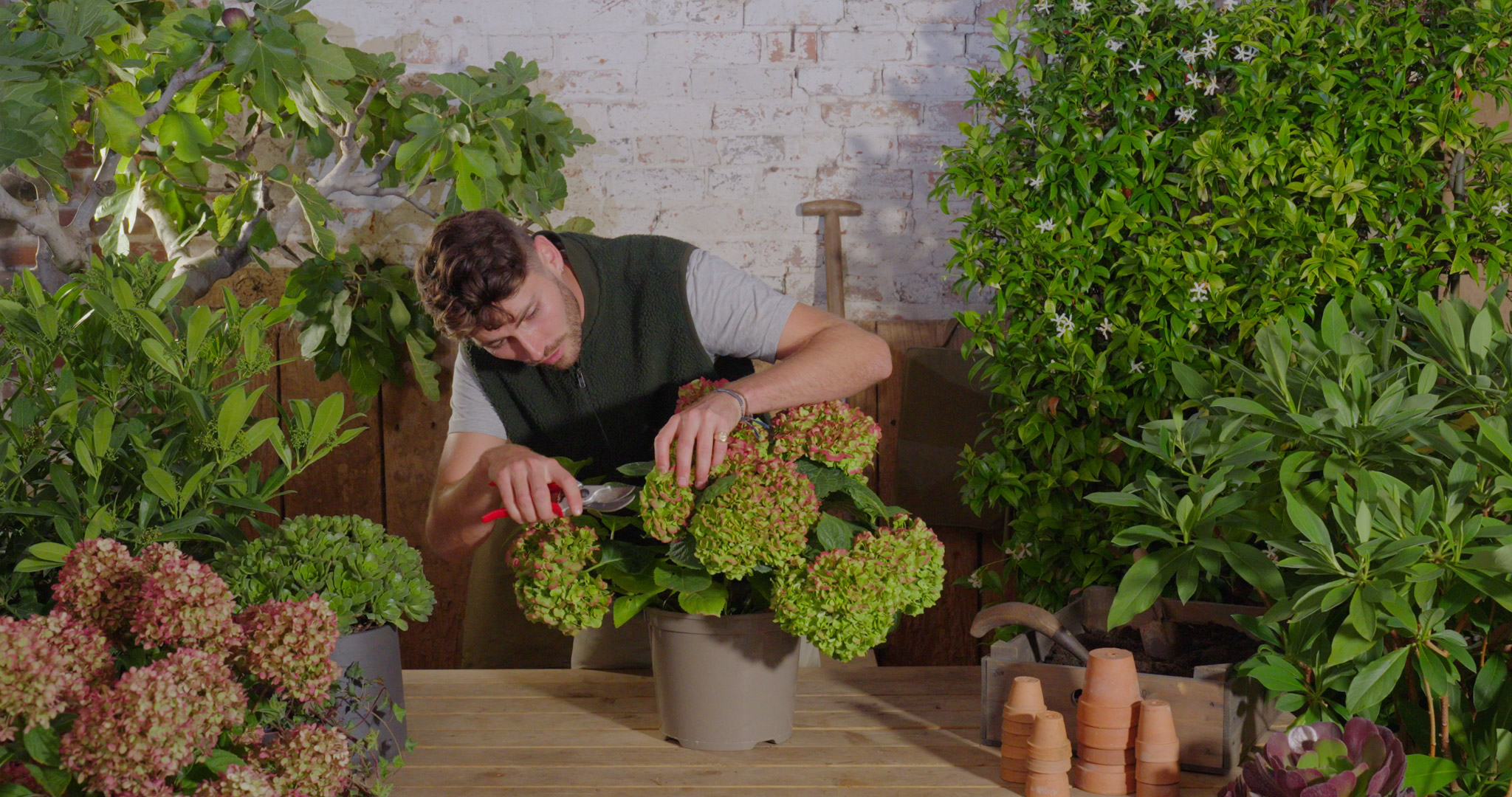
Seasonal guide to care for your
Hydrangea Libelle
Hydrangea ‘Libelle’, also known as Hydrangea macrophylla ‘Forever & Ever White’, is a compact, re-blooming shrub known for its large, strong white flower heads and lush green foliage. Flowering from early summer through autumn, it is ideal for offering long-lasting colour and structure.
Providing seasonal care is essential to ensure healthy growth, repeat flowering, and long-term performance. Below is a complete seasonal care guide for Hydrangea ‘Libelle’ throughout the year.
Spring

Pruning and Maintenance
In early spring, remove any dead, damaged, or frost-affected stems using clean, sharp secateurs. Avoid hard pruning, as Hydrangea ‘Libelle’ flowers on both old and new wood. Light shaping is all that is required.

Feed
Apply a slow-release fertiliser formulated for hydrangeas or flowering shrubs in spring as growth begins. This supports healthy foliage and encourages strong flowering.
.
Watering
Increase watering as temperatures rise, keeping the soil consistently moist but well-drained. Container-grown plants may require more frequent watering.
Summer
Pruning and Maintenance
Deadhead spent flower heads by cutting back to a healthy pair of leaves. This encourages continued flowering and keeps the plant looking tidy.
Mulching
Apply a 2 to 3-inch layer of organic mulch around the base of the plant to retain moisture, suppress weeds, and regulate soil temperature during warm weather. Keep mulch clear of the stems.
Watering
Hydrangea ‘Libelle’ requires regular watering during summer, especially in warm or dry weather. Do not allow the soil to dry out completely, as this can lead to wilting and reduced flowering.
Autumn
Pruning and Maintenance
As flowering slows, remove faded blooms if desired, but avoid cutting stems back hard. Leave most growth intact to protect developing buds for the following season.
Protection from frost
Refresh the mulch around the base of the plant to provide added insulation as temperatures begin to fall.
Winter
Pruning and Maintenance
Minimal pruning is required during winter. Remove only clearly dead or damaged wood, taking care not to disturb healthy stems that will flower next season.
Protection from frost
Hydrangea ‘Libelle’ is hardy, but extra protection is beneficial in colder or exposed areas. Apply a generous mulch around the base and protect container-grown plants with fleece during severe frost.
Pest and disease prevention
Pests and diseases are less active in winter, but inspect plants occasionally for signs of fungal issues or damage caused by winter wet and address promptly.

Plant SOS
Wilting leaves – A sign of dry soil, especially in warm weather. Water regularly and mulch to retain moisture.
Few or no flowers – A sign of frost damage or excessive pruning. Protect buds in winter and avoid hard pruning.
Yellowing leaves – A sign of nutrient deficiency or poor drainage. Apply suitable feed and improve soil conditions.
Scorched leaf edges – A sign of drought stress or too much direct sun. Increase watering and provide light shade.
Poor growth – A sign of compacted soil or lack of feeding. Improve soil structure and feed in spring.
Holes in leaves – A sign of slug and snail damage. Use Slug and Snail repellent or Slug and Snail control.


