


At a glance
Care Level
Foliage
- J
- F
- M
- A
- M
- J
- J
- A
- S
- O
- N
- D
Eventual height and spread
Height - 0.5m
Width - 0.5m

It reaches full growth in 2-5 years
General care for Japanese Forest Grass

Foliage
Green

Aspect
Sun - Partial - Shade

Cut back
Autumn

Divide
Not Required

Dead head
Spring

Feed
Spring
How to care for Japanese Forest Grass
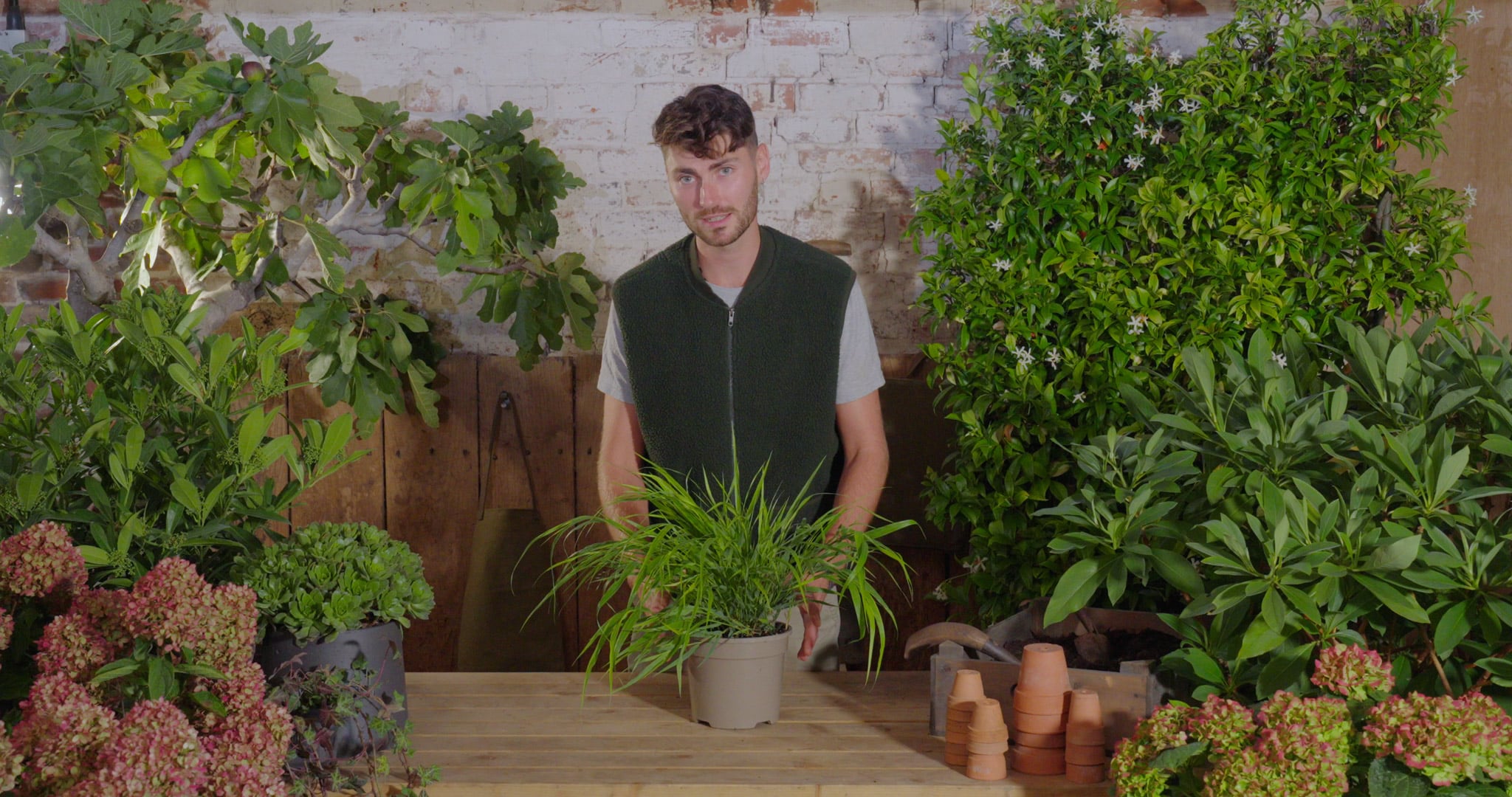
Seasonal guide to care for your
Japanese Forest Grass
Hakonechloa macra, commonly known as Japanese Forest Grass, is a graceful ornamental grass appreciated for its arching, cascading foliage.
To ensure the health and beauty of this plant throughout the year, it's important to provide seasonal care tailored to its specific needs. This guide explains how to care for Hakonechloa macra throughout the seasons.
Spring

Pruning and Maintenance
In early spring, inspect your Hakonechloa macra for any dead or damaged foliage from the previous year and gently prune this away using clean, sharp secateurs to encourage new growth and maintain an attractive appearance.

Feed
Encourage new growth by applying a balanced, slow-release fertilizer. Follow the manufacturer's instructions for the correct dosage.

Watering
Gradually increase watering as the weather warms up. Keep the soil consistently moist but not waterlogged.
Summer
Mulching
Apply a 2 to 3-inch layer of organic mulch around the base of the plant to retain soil moisture, regulate temperature and suppress weeds. This is especially important in hot and dry summer conditions.
Watering
In the warmer months, Japanese Forest Grass requires regular watering. Keep the soil consistently damp but not waterlogged. Ensure it receives sufficient moisture during dry periods.
Autumn
Pruning and Maintenance
As the growing season comes to an end, trim away any remaining dead or damaged foliage to tidy up the plant. Ensure not to over prune at this stage.
Protection from frost
Japanese Forest Grass is not fully frost-hardy, especially in colder regions. Consider covering the plant with mulch or frost cloth to shield it from freezing temperatures.
Winter
Pest and disease prevention
Pests and diseases are less active in winter, but it's essential to inspect your Japanese Forest Grass for any signs of issues and address them promptly

Plant SOS
Wilting or floppy foliage – A sign of dry soil or heat stress. Water regularly and keep soil evenly moist.
Brown leaf tips or edges – A sign of drought or too much sun. Increase watering and move to partial shade.
Yellowing foliage – A sign of poor drainage or nutrient deficiency. Improve drainage and feed lightly.
Weak or sparse growth – A sign of too much shade or exhausted soil. Provide light shade and enrich soil with organic matter.
Chewed leaf edges – A sign of slugs or snails. Use Slug & Snail Repellent or Slug & Snail Control.


