


Your bag is empty.


At a glance
Care Level
Foliage
- J
- F
- M
- A
- M
- J
- J
- A
- S
- O
- N
- D
Eventual height and spread
Height - 0.5-1m
Width - 0.5m

It reaches full growth in 2-5 years
General care for Mexican Feather Grass

Seed heads
Gold

Aspect
Sun - Partial

Cut back
Spring

Divide
Spring

Dead head
Autumn

Feed
Spring
How to care for Mexican Feather Grass
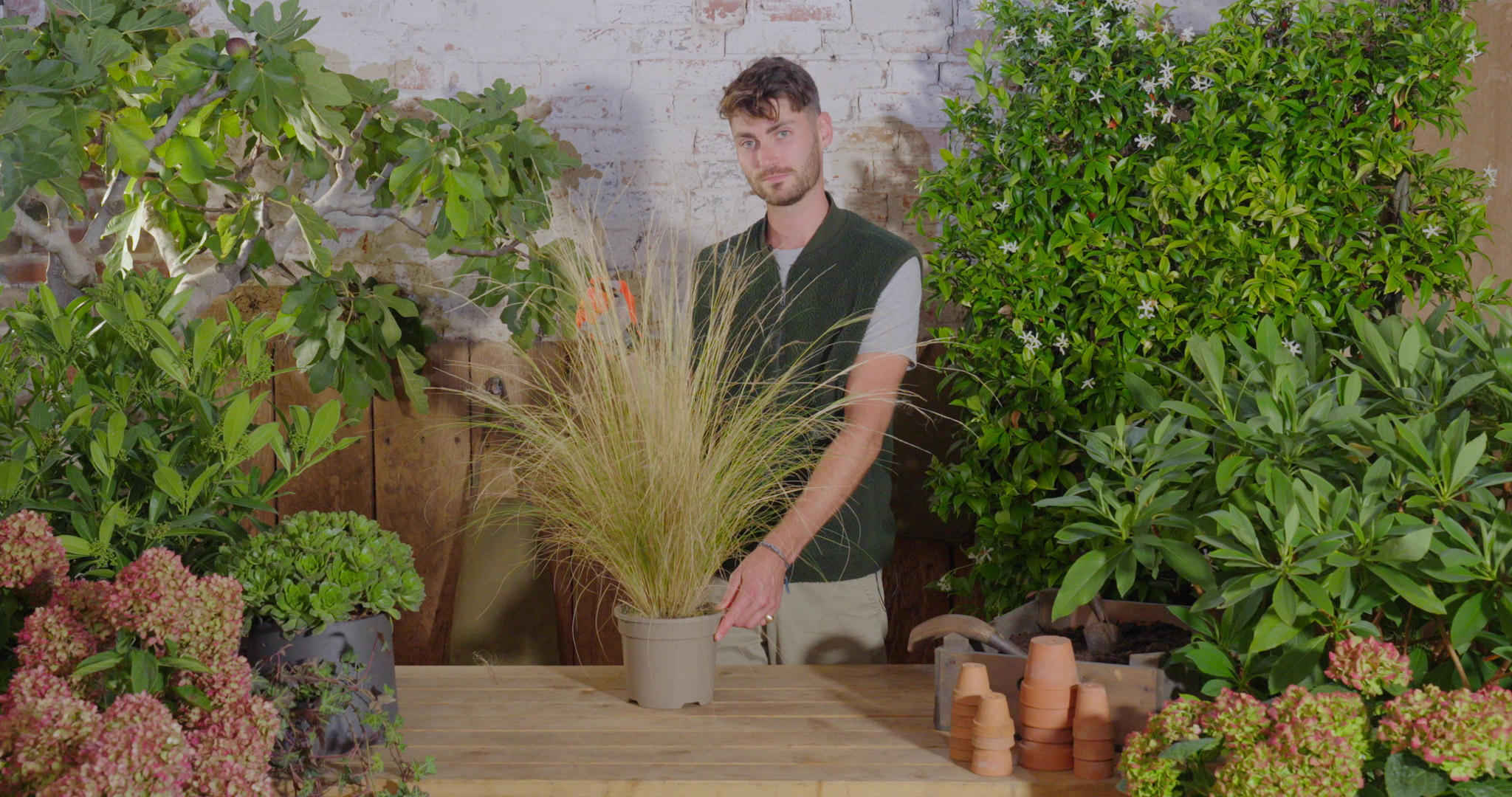
Seasonal guide to care for your
Mexican Feather Grass
Stipa tenuissima, also known as Mexican feather grass, is an ornamental grass known for its delicate, feathery appearance. It's relatively easy to care for but does require some seasonal attention to thrive. Here's an in-depth seasonal care guide for Stipa tenuissima:
Spring

Pruning and Maintenance
In early spring, cut back the previous year's growth to just a few inches above the ground using clean, sharp secateurs. This will encourage new, fresh growth and maintain the plant's shape. For fresher growth, gently brush through with a gloved hand to thin the grass out.

Feed
Stipa doesn't require heavy feeding, however, you can provide a balanced, slow-release fertiliser in early spring to support healthy growth. Follow the manufacturer's instructions for the correct dosage.

Dividing (if necessary)
If your Stipa has become overcrowded, consider dividing in early spring. Carefully lift the plant, split into smaller sections, and replant into well prepared soil with adequate spacing.
.
Watering
Gradually increase watering as the weather warms up. Mexican feather grass is fairly drought tolerant, so water sparingly.
Summer
Mulching
Apply a 2 to 3-inch layer of organic mulch around the base of the plant to retain soil moisture, regulate temperature and suppress weeds. This is especially important in hot and dry summer conditions.
Watering
Once established, Mexican feather grass is fairly drought tolerant. Water sparingly, providing moisture only during prolonged dry spells. Overwatering can lead to root rot and other issues.
Autumn
Pruning and Maintenance
As the growing season winds down, you can lightly trim back the grass to remove any dead or unsightly foliage. This can also help improve winter appearance.
Protection from frost
In particularly cold regions, consider applying an extra mulch layer around the base of the grass to insulate the roots.
Winter
Pruning and Maintenance
Foliage can be left in place over winter to add texture and interest to the garden, or it can be trimmed back to a few inches above the ground for a tidier appearance.
Pest and disease prevention
Pests and diseases are less active in winter, but it's essential to inspect your Mexican feather grass for any signs of issues and address them promptly.

Plant SOS
Wilting or collapsing foliage – A sign of overwatering or poor drainage. Reduce watering and improve soil drainage.
Yellowing foliage – A sign of waterlogged soil. Allow soil to dry and plant in free-draining conditions.
Weak or sparse growth – A sign of low light. Move to full sun for best performance.
Flopping or untidy clumps – A sign the plant needs grooming. Comb through or cut back lightly in spring.
Rotting at the base – A sign of prolonged winter wet. Replant in well-drained soil and avoid heavy mulch.


