


At a glance
Care Level
Flowering period
- J
- F
- M
- A
- M
- J
- J
- A
- S
- O
- N
- D
Foliage
- J
- F
- M
- A
- M
- J
- J
- A
- S
- O
- N
- D
Eventual height and spread
Height - 0.5-1m
Width - 0.5-1m

It reaches full growth in 2-5 years
General care for Sweet Box

Flower colour
White

Aspect
Partial - Shade

Cut back
Not Required

Divide
Not Required

Dead head
Spring

Feed
Spring
How to care for Sweet Box
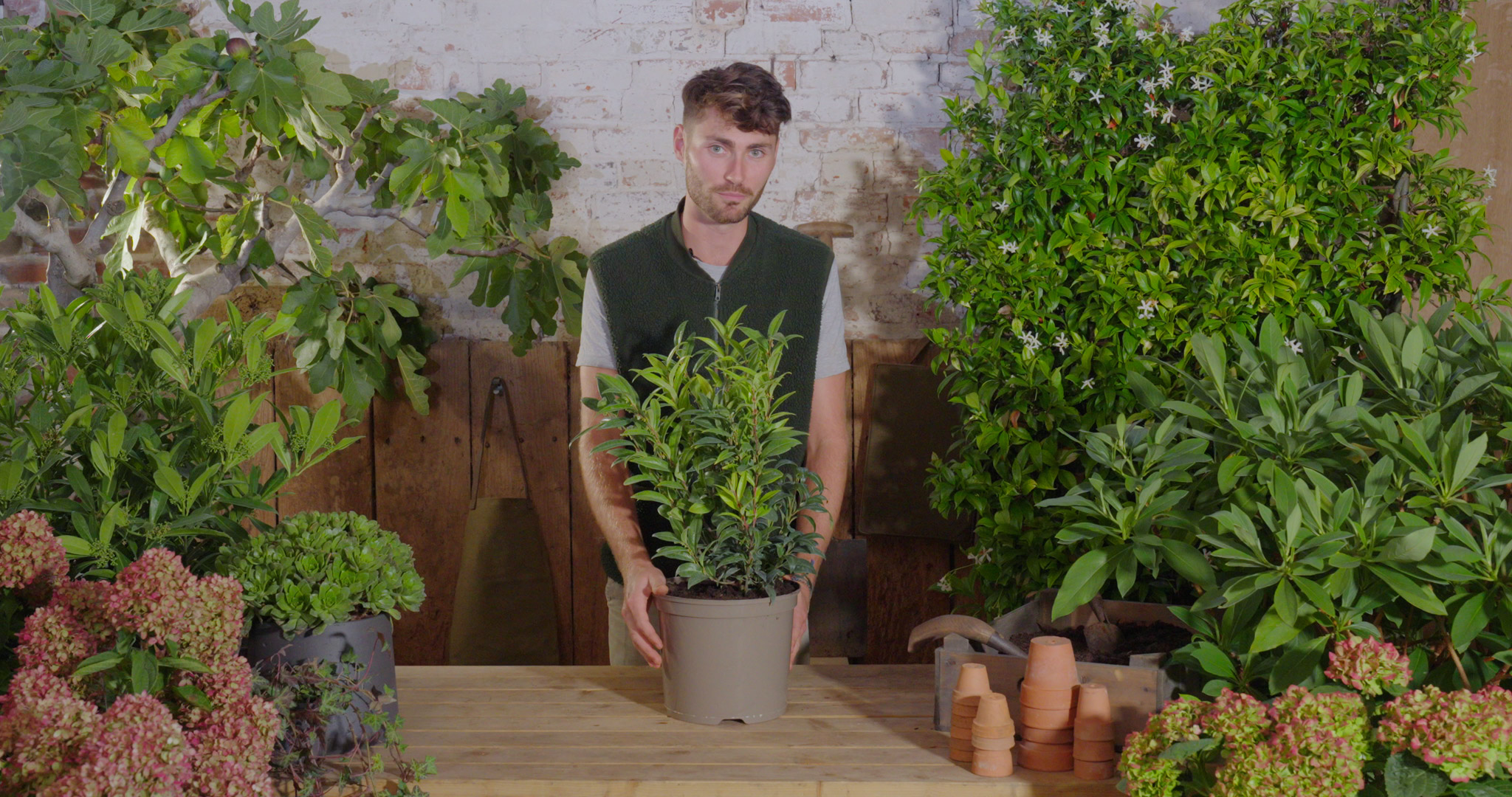
Seasonal guide to care for your
Sweet Box
Sarcococca confusa, commonly known as Sweet Box 'Winter Gem,' is an excellent choice for gardens. It's a versatile and hardy evergreen shrub known for its fragrant winter flowers. Here's an in-depth seasonal care guide for Sarcococca 'Winter Gem':
Spring

Pruning and Maintenance
In spring, perform light pruning to remove any dead or damaged branches and to shape the shrub. Sarcococca naturally maintains its shape, so avoid heavy pruning.

Feed
Apply a balanced, slow-release fertiliser during early spring to provide essential nutrients for the growing season. Follow the manufacturer's recommendations for dosage.
.
Watering
Gradually increase watering as the weather warms up.
Summer
Mulching
Apply a 2 to 3-inch layer of organic mulch around the base of the plant to retain soil moisture, regulate temperature and suppress weeds. This is especially important in hot and dry summer conditions.
Watering
While Sarcococca is generally drought-tolerant, it's a good practice to water it during prolonged dry spells, especially if it's a newly planted shrub. Water deeply to ensure the root ball is well-hydrated.
Autumn
Protection from frost
Check the mulch depth and condition and refresh if it has decomposed or thinned out, this helps to prepare the plant for the upcoming winter.
Winter
Pest and disease prevention
While Sarcococca is generally hardy, providing some winter protection in extremely cold regions, such as covering with horticultural fleece, can be beneficial during harsh frosts.

Plant SOS
Wilting foliage – A sign of dry soil during establishment. Water regularly until well established.
Yellowing leaves – A sign of poor drainage or nutrient deficiency. Improve drainage and feed lightly.
Few or no flowers – A sign of too much shade stress or dry soil. Provide light shade and keep soil moist.
Sparse or weak growth – A sign of poor soil conditions. Enrich soil with organic matter.
Sticky leaves or black sooty mould – A sign of scale or aphids. Treat with horticultural oil or insecticidal soap.
Chewed leaf edges – A sign of slugs or snails. Use Slug & Snail Repellent or Slug & Snail Control.


