


At a glance
Care Level
Flowering period
- J
- F
- M
- A
- M
- J
- J
- A
- S
- O
- N
- D
Foliage
- J
- F
- M
- A
- M
- J
- J
- A
- S
- O
- N
- D
Eventual height and spread
Height - 0.5m
Width - 0.5m

It reaches full growth in 2-5 years
General care for Salvia Caradonna

Flower colour
Purple

Aspect
Sun

Cut back
Spring - Autumn

Divide
Spring

Dead head
Summer

Feed
Spring
How to care for Salvia Caradonna
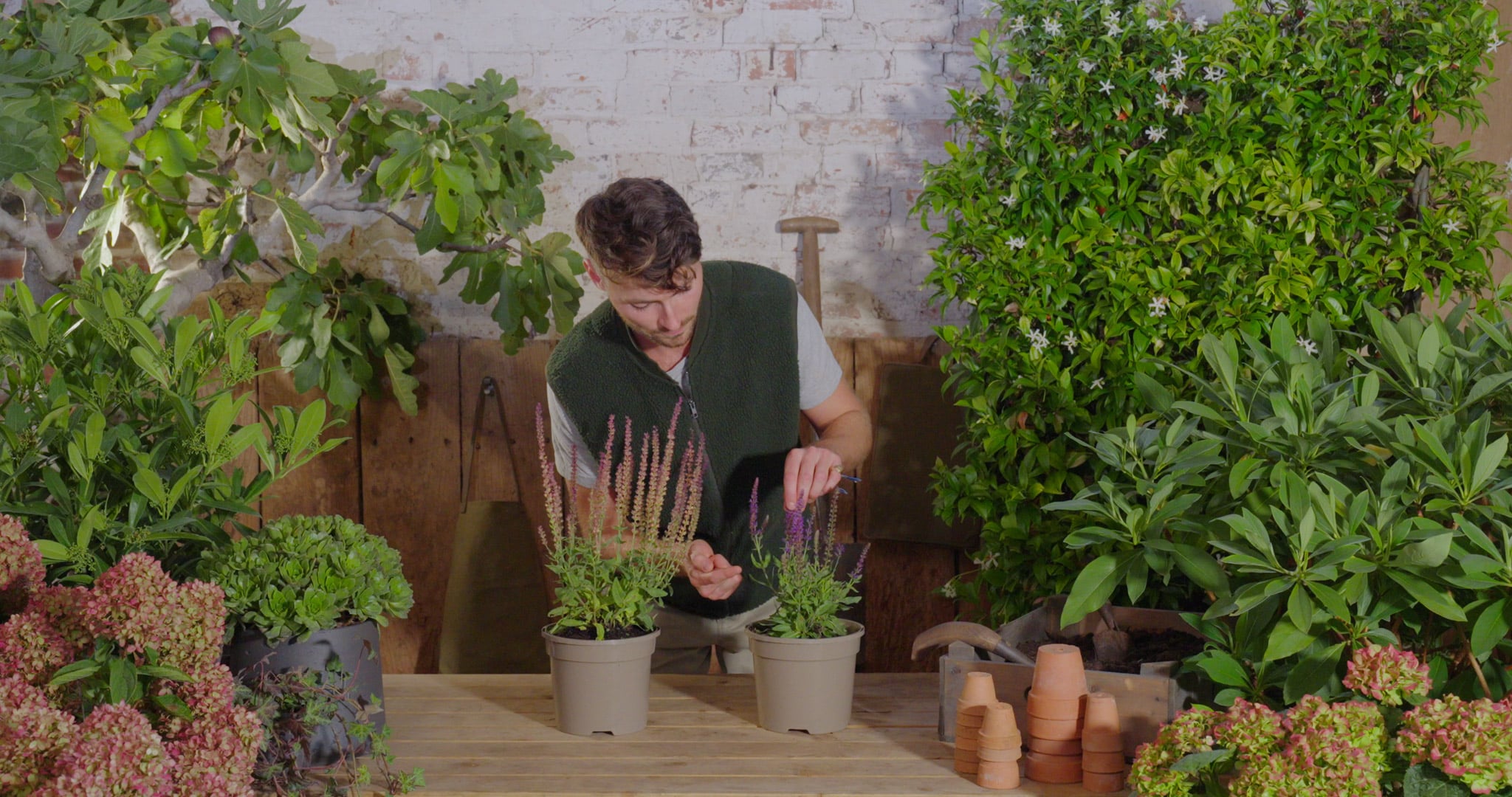
Seasonal guide to care for your
Salvia Caradonna
Salvia Caradonna, or Salvia nemorosa 'Caradonna,' is a striking perennial plant that is known for its vibrant violet-blue flowers and attractive dark green foliage.
Providing seasonal care is essential to ensure the health and longevity of this plant. Here's an in-depth guide for taking care of Salvia Caradonna across all seasons.
Spring

Pruning and Maintenance
In early spring, cut back the dead stems and foliage from the previous year using clean, sharp secateurs to encourage healthy new growth and a more compact shape.

Feed
Apply a balanced, slow-release fertiliser formulated for flowering perennials in spring as new growth emerges. Follow the manufacturer's instructions for the recommended dosage to support healthy development.

Dividing (if necessary)
Every 2-3 years you can divide the plant in early spring to rejuvenate it. Carefully remove the plant, split into sections, and replant into well prepared soil with adequate spacing.
.
Watering
Gradually increase watering as the weather warms up.
Summer
Pruning and Maintenance
Regularly remove spent flowers by pinching them off. This encourages the plant to continue blooming throughout the summer.
As the plant grows taller and the flowers become heavier, you may need to provide support or staking to prevent the stems from bending or breaking.
Mulching
Apply a 2 to 3-inch layer of organic mulch around the base of the plant to retain soil moisture, regulate temperature and suppress weeds. This is especially important in hot and dry summer conditions.
Watering
Salvia Caradonna is drought-tolerant but benefits from regular watering during dry spells, especially for young plants to encourage deep root growth. Water deeply, allowing the soil to dry between waterings.
Autumn
Pruning and Maintenance
As the growing season comes to an end, you can cut back Salvia Caradonna again, removing any dead or overgrown stems. Leave a few inches of growth to protect the plant over the winter.
Protection from frost
Refresh the mulch around the base of the plant to provide additional protection during the winter months.
Winter
Protection from frost
Salvia Caradonna is generally hardy, but providing extra protection during harsh winters can be beneficial, especially in colder regions. Re applying a layer of mulch around the base of the plant helps insulate the roots.
Pest and disease prevention
Pests and diseases are less active in winter, but it's essential to inspect your plant for any signs of issues and address them promptly

Plant SOS
Wilting foliage – A sign of dry soil during hot weather. Water during prolonged dry periods.
Few or no flowers – A sign of too much shade or excess feeding. Move to full sun and avoid rich fertilizers.
Yellowing leaves – A sign of poor drainage or overwatering. Improve drainage and reduce watering.
Floppy flower stems – A sign of rich soil or lack of pruning. Avoid overfeeding and cut back after flowering.
Leggy growth – A sign the plant needs trimming. Cut back after flowering to encourage fresh blooms.
Distorted or sticky leaves – A sign of aphids. Remove with water spray or apply insecticidal soap.


